
Choosing the right pin header series is a critical step in PCB design and electronic product development. Although pin headers are small components, they have a direct impact on assembly efficiency, signal transmission, mechanical stability, and overall product reliability. For engineers, product designers, and purchasing teams, selecting the correct pin header is not simply a matter of size. It requires a careful evaluation of pitch, pin count, mounting style, material, plating, and application environment.
One of the first specifications to consider is pitch, which refers to the distance between adjacent pins. It is one of the most important parameters when selecting a pin header series because it affects PCB layout, connector compatibility, and assembly space. Common pitch options include 1.27mm, 2.00mm, and 2.54mm.
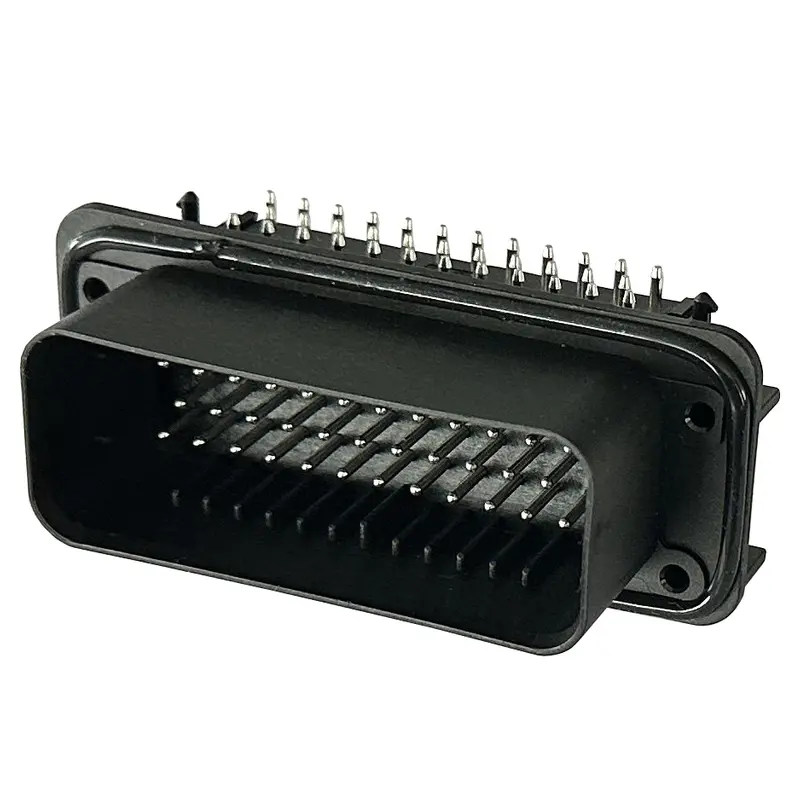
Smaller pitch pin headers are often used in compact electronic devices where board space is limited and high-density design is required. Larger pitch options are more suitable for applications that need easier handling, better mechanical strength, and more convenient manual assembly. The right choice depends on the size of the PCB, the required current capacity, and the matching connector system used in the project.
Pin count is another essential factor in choosing the right pin header series. Different electronic applications require different numbers of signal lines, power lines, or grounding points, so the selected connector must support the exact circuit requirements of the design.
In addition to current design needs, engineers should also think about future expansion. In modular systems or upgradeable devices, choosing a pin header with slightly more positions can offer better flexibility for later development. A well-planned pin count can improve both design efficiency and product adaptability.
The mounting style of a pin header affects both board layout and assembly method. Straight pin headers are commonly used in vertical board-to-board or wire-to-board connections, while right-angle pin headers are ideal for applications where horizontal connection or limited installation height is important.
Surface-mount pin headers are often preferred in automated production and compact product designs because they help save PCB space and support efficient assembly. Through-hole pin headers, on the other hand, usually offer stronger mechanical retention and are often chosen for products that may face frequent insertion, vibration, or higher mechanical stress. The ideal mounting style should match both the product structure and the manufacturing process.
Material and plating are closely related to electrical performance and long-term reliability. The terminal material affects conductivity, strength, and durability, while the plating influences corrosion resistance, contact stability, and mating performance.
Tin-plated pin headers are widely used in standard commercial applications because they offer good solderability and cost efficiency. Gold-plated pin headers are better suited for applications that require lower contact resistance, better oxidation resistance, and longer service life, especially in high-reliability electronics and communication equipment.
The housing material is equally important. A good pin header insulator should provide strong electrical insulation and sufficient heat resistance for soldering and operating conditions. High-quality engineering plastics can help improve connector stability and reduce the risk of deformation during production and use.
The working environment should always be taken into account when selecting a pin header series. In industrial equipment, automotive electronics, and outdoor control systems, connectors may be exposed to vibration, humidity, dust, temperature changes, or other demanding conditions. In these situations, the connector should offer strong structural stability and dependable environmental resistance.
Buyers often prefer pin headers with flame-retardant housing materials, precise terminal structures, and strong retention force for these applications. Choosing a connector that matches the real operating environment can help reduce failure risk and improve the overall lifespan of the finished product.
Another important step is to confirm compatibility with the corresponding female header, IDC connector, socket, or cable assembly. The pin header should match not only in pitch and pin arrangement, but also in insertion depth, contact design, and dimensional tolerance.
Poor compatibility can lead to assembly errors, unstable mating, or reduced production efficiency. For this reason, connector selection should always be based on the full interconnection system rather than the pin header alone. Good compatibility helps improve assembly consistency and reduces the chance of quality issues during mass production.
For OEM and ODM projects, standard specifications may not always be enough. In many cases, customized pin header solutions can improve product fit and assembly performance. Some manufacturers can provide customized pin lengths, special plating thickness, different plastic colors, unique packaging methods, or other modifications based on project requirements.
Customization can be especially useful when the product has special structural limitations, branding needs, or technical performance targets. Working with a manufacturer that offers flexible customization options can help ensure the connector is better aligned with the final application.
Choosing the right pin header series for your PCB project is about more than selecting a connector that physically fits the board. It requires balancing space limitations, electrical requirements, mounting method, material quality, environmental durability, and production compatibility.
A properly selected pin header can improve assembly quality, enhance signal stability, and increase the long-term reliability of the electronic product. Whether you are designing consumer electronics, industrial equipment, automotive systems, or communication devices, careful connector selection is an important part of building a successful and dependable PCB solution.
Bu web sitesi, web sitemizde en iyi deneyimi yaşamanızı sağlamak için çerezleri kullanır.

 English
 Español
 Portugues
 Pусский
 Français
 Deutsch
 日本語
 한국어
 العربية
 Italiano
 Polski
 ไทย
 हिन्दी
 Indonesia
 Melayu
 Tiếng Việt
 עִברִית

Yorum
(0)